
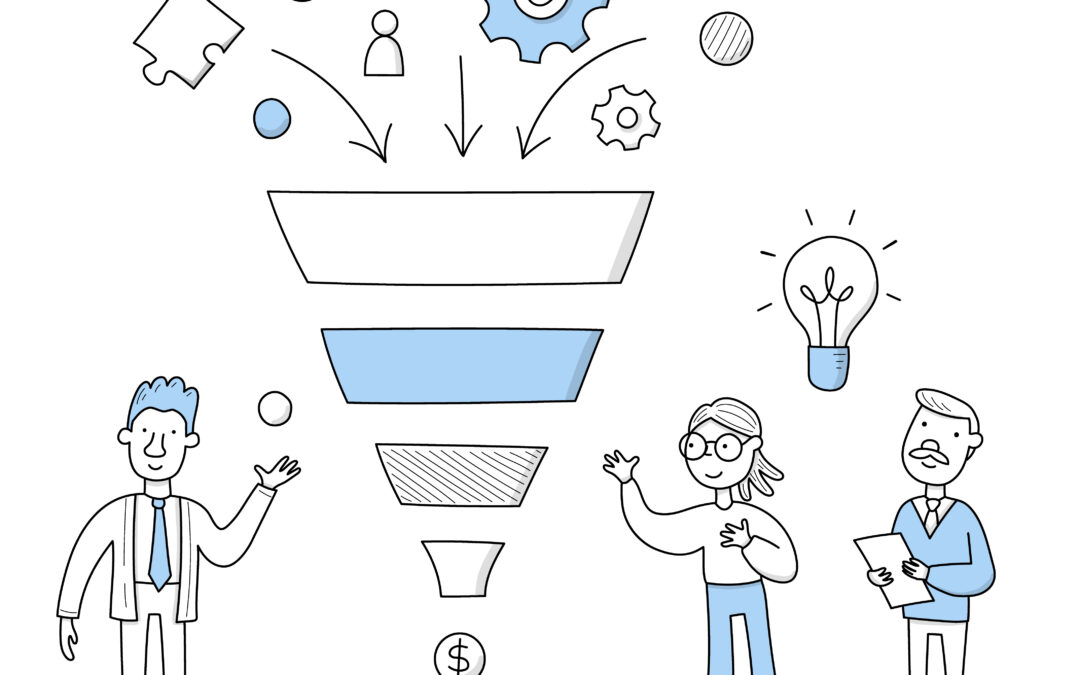
Most e-commerce businesses focus on the wrong metric. They obsess over traffic, chasing more visitors through expensive advertising campaigns and social media promotions. But traffic without conversion is just expensive attention that leaves no lasting value. The difference between struggling e-commerce stores and thriving ones is not traffic volume—it is funnel architecture.
An e-commerce funnel is the complete journey from first awareness to post-purchase loyalty. It is not a single page or a single campaign. It is a system of interconnected experiences designed to move customers toward purchase while removing friction at every step. Building this system requires understanding each stage, measuring what matters, and optimizing continuously. This guide covers everything you need to know.
What Is an E-Commerce Funnel?
A funnel represents the customer journey from awareness to action. At each stage, some customers drop off. The goal is to minimize drop-offs by addressing friction, building trust, and making the next step obvious. Unlike a traditional sales funnel, e-commerce funnels include post-purchase experiences that drive repeat business.
1. Why Most E-Commerce Funnels Fail
Before building a successful funnel, understand why most fail. The patterns are consistent across thousands of stores, regardless of product category or price point.
The Five Fatal Flaws
- Leaky top-of-funnel: Marketing attracts the wrong audience—people who were never going to buy. High traffic, zero conversions.
- Trust gaps mid-funnel: Product pages lack social proof, clear benefits, or risk reversal. Visitors arrive but do not add to cart.
- Checkout friction: Unexpected costs, mandatory account creation, or complex forms kill completed purchases.
- No post-purchase follow-up: First-time buyers receive no communication after order confirmation. They never return.
- No measurement: Teams guess at funnel performance because they track only top-line revenue and total traffic.
Each flaw is fixable. But fixing requires understanding the funnel as a system, not as isolated tactics. The remainder of this guide addresses each stage systematically.
The Funnel Equation:
Revenue = Traffic x Conversion Rate x Average Order Value x Repeat Purchase Rate. Improving any variable increases revenue. Improving all four multiplies results. The funnel touches every variable.
2. Stage One: Awareness (Getting Found)
The awareness stage is where potential customers first encounter your brand. At this stage, they are not ready to buy. They are researching, browsing, or passively consuming content. The goal is not immediate conversion. The goal is capturing attention and building enough interest to move to the next stage.
Awareness Channels That Work in 2026
- Organic search (SEO): Product reviews, buying guides, and comparison content attract high-intent traffic. Investment here pays compound returns over time.
- Social media organic: Platform-specific content (TikTok, Instagram Reels, Pinterest) builds brand awareness among targeted demographics.
- Paid social: Targeted advertising accelerates awareness. Best for product launches and seasonal campaigns.
- Influencer partnerships: Authentic recommendations from trusted creators drive awareness with built-in credibility.
- Marketplaces: Amazon, Etsy, and Walmart provide immediate awareness for product searches.
- Email referrals: Existing customers referring friends creates high-trust awareness at low cost.
Measuring Awareness Success
Awareness metrics differ from conversion metrics. At this stage, track:
- Impressions and reach
- Click-through rates from each channel
- Cost per thousand impressions (CPM)
- Brand search volume over time
- Social engagement rates
Do not expect immediate sales from awareness campaigns. The goal is to fill the top of the funnel so consideration and conversion stages have enough volume to work with.
3. Stage Two: Consideration (Building Interest)
Once potential customers know you exist, they enter the consideration stage. They visit your website, browse products, compare options, and evaluate whether your brand meets their needs. This is where most e-commerce funnels leak heavily.
Optimizing Product Pages for Consideration
The product page is the consideration stage hub. Every element either builds confidence or creates doubt. High-performing product pages include:
- Professional imagery: Multiple angles, zoom capability, and lifestyle photos showing products in use.
- Video demonstrations: 30-60 second videos showing product features and benefits in action.
- Social proof: Verified reviews with photos, rating summaries, and trust badges.
- Clear value proposition: What problem does this product solve? Why this product over alternatives?
- Scarcity and urgency: Low stock indicators, limited-time offers, or countdown timers (used honestly).
- Risk reversal: Free returns, satisfaction guarantees, or warranty information prominently displayed.
- Size and specification guides: Tools that help customers choose correctly the first time.
The Consideration Metrics That Matter
- Time on product page (indicates engagement)
- Scroll depth (how far visitors read)
- Add-to-cart rate (percentage of visitors who add product to cart)
- Product image clicks and video plays
- Review read rate (measured through event tracking)
If add-to-cart rates are below 5% for most products, the consideration stage is broken. Fix product pages before investing more in traffic.
Consideration Accelerator:
Live chat during consideration reduces friction dramatically. Visitors with questions who receive immediate answers convert at 3-5x higher rates than those who do not. Even AI-powered chatbots improve conversion when implemented well.
4. Stage Three: Conversion (Closing the Sale)
The conversion stage begins when a customer adds a product to cart and ends when they complete payment. This is the most fragile part of the funnel. Cart abandonment rates average 65-80% across e-commerce. Reducing abandonment by even 10% significantly increases revenue.
Checkout Optimization That Works
- Guest checkout: Requiring account creation kills sales. Offer guest checkout prominently. Ask for account creation after purchase.
- Progress indicators: Show customers where they are in the checkout process. Reduce uncertainty about how many steps remain.
- Form simplification: Ask only for essential information. Use address autocomplete. Remove optional fields.
- Trust signals during checkout: Display security badges, return policy summary, and customer service contact information.
- Multiple payment options: Credit cards, PayPal, Apple Pay, Google Pay, and buy-now-pay-later services like Klarna or Afterpay.
- Transparent shipping costs: Unexpected shipping costs are the number one reason for cart abandonment. Show costs early.
- Mobile optimization: Over 60% of e-commerce traffic is mobile. Checkout must work flawlessly on small screens.
Cart Abandonment Recovery
Even with perfect checkout optimization, some customers will abandon. Recovery sequences bring many back.
- Abandoned cart email sequence: First email within 1 hour, second within 24 hours, third within 72 hours. Include product images and direct checkout link.
- SMS abandonment recovery: Higher open and click rates than email. Best for time-sensitive offers.
- Exit-intent popups: When users move to close the browser tab, offer a small discount or free shipping to complete purchase.
- Retargeting ads: Show abandoned products to customers across Facebook, Instagram, and Google display network.
Well-executed abandonment recovery converts 10-15% of abandoned carts back to purchases. For a store with 1,000 abandoned carts per month at $50 average order value, recovery adds $5,000-7,500 monthly.
5. Stage Four: Post-Purchase (Driving Repeat Business)
The funnel does not end at purchase. Post-purchase experiences determine whether a first-time buyer becomes a repeat customer. Repeat customers spend 3-5x more than new customers over time and cost significantly less to acquire.
Post-Purchase Communication That Builds Loyalty
- Order confirmation email: Clear order summary, expected delivery date, and customer support contact. Not just a receipt.
- Shipping updates: Automated notifications at each stage: order processed, shipped, out for delivery, delivered.
- Delivery confirmation and thank you: Welcome first-time buyers to your brand. Include care instructions or product tips.
- Review request (timed): Ask for product reviews 7-14 days after delivery, once customers have had time to use the product.
- Cross-sell recommendations: Based on past purchase, suggest complementary products for next time.
Building a Repeat Purchase Engine
- Loyalty programs: Points for purchases, reviews, social shares, and birthdays. Redeemable for discounts or free products.
- Subscribe and save: For consumable products, offer recurring delivery with discount and free shipping.
- Win-back campaigns: Email sequences for customers who have not purchased in 90-180 days. Offer incentive to return.
- Exclusive early access: Existing customers get first access to new products, sales, or limited editions.
- Referral programs: Two-way incentives: existing customer gets discount, referred friend gets discount on first purchase.
The businesses with the highest customer lifetime value treat post-purchase as a product, not an afterthought. They design every interaction to increase the probability of another purchase.
The Loyalty Math:
Increasing customer retention by 5% increases profits by 25-95%, according to research. Most e-commerce businesses underinvest in retention because loyalty benefits compound slowly. Start retention work on day one.
6. Funnel Metrics and Analytics
You cannot optimize what you cannot measure. A complete funnel dashboard tracks metrics at each stage, with leading indicators that predict future performance.
Top-of-Funnel Metrics
- Traffic by channel (organic, paid, social, direct, referral)
- Cost per click (CPC) and cost per thousand impressions (CPM)
- New vs. returning visitor ratio
- Bounce rate by landing page
- Session duration and pages per session
Mid-Funnel Metrics
- Product page view to add-to-cart conversion rate
- Average time to add-to-cart
- Scroll depth and engagement heatmaps
- Video play rate and completion rate
- Size guide or specification tool usage
Bottom-of-Funnel Metrics
- Add-to-cart to checkout start rate
- Checkout start to purchase completion rate
- Abandonment rate by checkout step
- Payment method selection distribution
- Shipping method selection distribution
- Cart abandonment recovery conversion rate
Post-Purchase Metrics
- Repeat purchase rate (30, 60, 90 days)
- Customer lifetime value (LTV) by cohort
- Average order value (AOV) across customer segments
- Review rate (percentage of customers leaving reviews)
- Referral program participation and conversion
- Subscription retention rates if applicable
Set up dashboards that update daily. Review funnel metrics weekly. Investigate significant changes immediately before they become patterns.
7. Increasing Average Order Value
Average order value multiplies the impact of every customer. Increasing AOV from $50 to $60 is equivalent to acquiring 20% more customers without spending additional acquisition dollars.
AOV Strategies That Work
- Product bundles: Pre-packaged combinations of complementary products at a discount compared to buying separately.
- Frequently bought together: Algorithm-driven recommendations based on purchase history of all customers.
- Free shipping thresholds: Offer free shipping at $X. Many customers add items to reach the threshold.
- Post-purchase upsells: Offer a discounted add-on product after checkout completion but before order fulfillment.
- Tiered discounts: Spend $50 save 5%, spend $100 save 10%, spend $150 save 15%.
- Subscription options: Offer subscription pricing for regularly purchased items, increasing long-term value.
Cart Page Upsells
The cart page is prime AOV real estate. Customers have already decided to buy. Suggesting relevant additions is helpful, not pushy.
- Low-cost accessories that complement main purchase
- Extended warranties or protection plans
- Gift wrapping for occasions
- Expedited shipping upgrades
Test AOV strategies one at a time. Measure impact on conversion rate as well as AOV. Some strategies increase AOV but reduce overall conversion. Find the balance that maximizes total revenue.
AOV Caution:
Do not increase AOV at the expense of customer experience. Aggressive upsells feel manipulative. Helpful recommendations feel valuable. The difference is intent and relevance.
8. The Psychology Behind Funnel Optimization
Effective funnels apply psychological principles at each stage. Understanding these principles explains why certain tactics work and guides optimization decisions.
Reciprocity
People feel obligated to return favors. Give value before asking for purchase. Free shipping, helpful content, discount codes for email signups, and generous sampling policies trigger reciprocity.
Social Proof
People follow the behavior of similar others. Reviews, testimonials, user-generated content, and popularity indicators (bestseller badges, low stock warnings) provide social proof throughout the funnel.
Scarcity and Urgency
Limited availability or limited time increases perceived value and motivates action. Use honestly. False scarcity damages trust permanently.
Authority
People trust experts and official endorsements. Certifications, expert reviews, media mentions, and professional associations build authority.
Liking
People prefer to buy from brands they like. Brand voice, visual identity, founder stories, and shared values create liking.
Commitment and Consistency
Once people commit to a small action, they are more likely to commit to larger actions. Micro-commitments like email signups, quiz completions, or save-for-later lead to purchase.
Apply these principles thoughtfully. Overuse feels manipulative. Strategic use at key funnel points improves conversion naturally.
9. Funnel Testing and Optimization Process
Funnels are never finished. Continuous testing and optimization separate average stores from exceptional ones.
The Testing Hierarchy
- Step 1: Identify biggest leak. Where in the funnel is the largest percentage drop-off? Fix highest-impact leaks first.
- Step 2: Form hypothesis. Why is this leak happening? What change would reduce it? Be specific.
- Step 3: Prioritize tests. Use PXL (potential times likelihood) framework. High potential, high likelihood tests run first.
- Step 4: Run A/B test. Split traffic between control (current) and variant (changed). Run until statistical significance.
- Step 5: Implement winner. Deploy winning variant. Document results. Move to next hypothesis.
What to Test
- Headlines and value propositions
- Product images (angles, backgrounds, lifestyle vs. white background)
- Call-to-action button text and color
- Pricing presentation and discount structures
- Checkout form field order and quantity
- Shipping threshold amounts
- Email subject lines and send timing
Test one variable at a time. Testing multiple changes simultaneously makes it impossible to know which change caused the result.
10. Common Funnel Mistakes and Fixes
Mistake: Driving Traffic to Homepage
Visitors from ads or social media expect relevance. Sending them to a generic homepage creates friction immediately.
Fix: Send traffic to dedicated landing pages that match the ad promise. Product-specific ads go to product pages. Category ads go to category pages.
Mistake: Slow Page Load Times
Every second of delay reduces conversion. Mobile users are especially sensitive.
Fix: Optimize images, implement caching, use a fast hosting provider, and consider a performance budget for development.
Mistake: No Mobile Optimization
Over 60% of traffic is mobile. Desktop-optimized funnels perform poorly on phones.
Fix: Test every funnel step on multiple mobile devices. Simplify forms. Increase button sizes. Ensure text is readable without zooming.
Mistake: Too Many Choices
Choice overload reduces conversion. Customers faced with too many options often choose nothing.
Fix: Limit product options per page. Use filters and sorting to help customers narrow choices. Highlight bestsellers and staff picks.
Mistake: No Post-Purchase Follow-Up
First-time buyers who receive no follow-up rarely return.
Fix: Implement automated post-purchase email sequences. Welcome new customers. Ask for reviews. Offer relevant cross-sells after delivery.
The Biggest Mistake:
The most common funnel mistake is treating it as a project rather than a process. Funnel optimization never ends. Customer expectations change. Competitors improve. Technology evolves. Commit to continuous improvement.
11. Funnel Tools and Technology Stack
Building and optimizing funnels requires the right tools. Here is a recommended stack for 2026.
Analytics and Measurement
- Google Analytics 4: Free, comprehensive, and the industry standard for funnel tracking.
- Hotjar or Microsoft Clarity: Heatmaps, session recordings, and user feedback for qualitative insights.
- Triple Whale or Northbeam: Marketing attribution and unified analytics for multi-channel funnels.
Email and SMS
- Klaviyo: Best-in-class for e-commerce email and SMS with deep integration to Shopify and other platforms.
- Omnisend: Strong alternative with competitive pricing for smaller stores.